The short answer
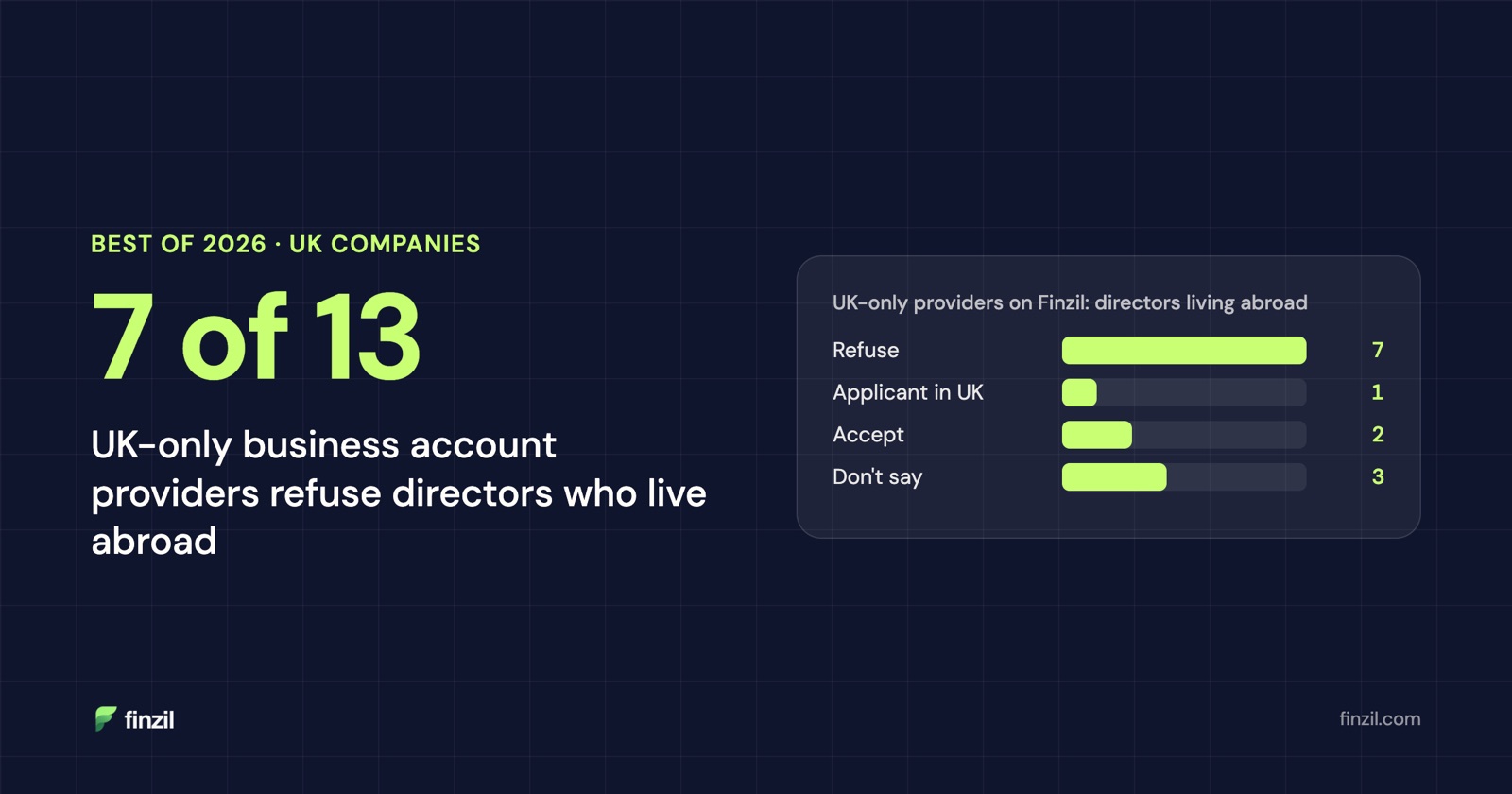
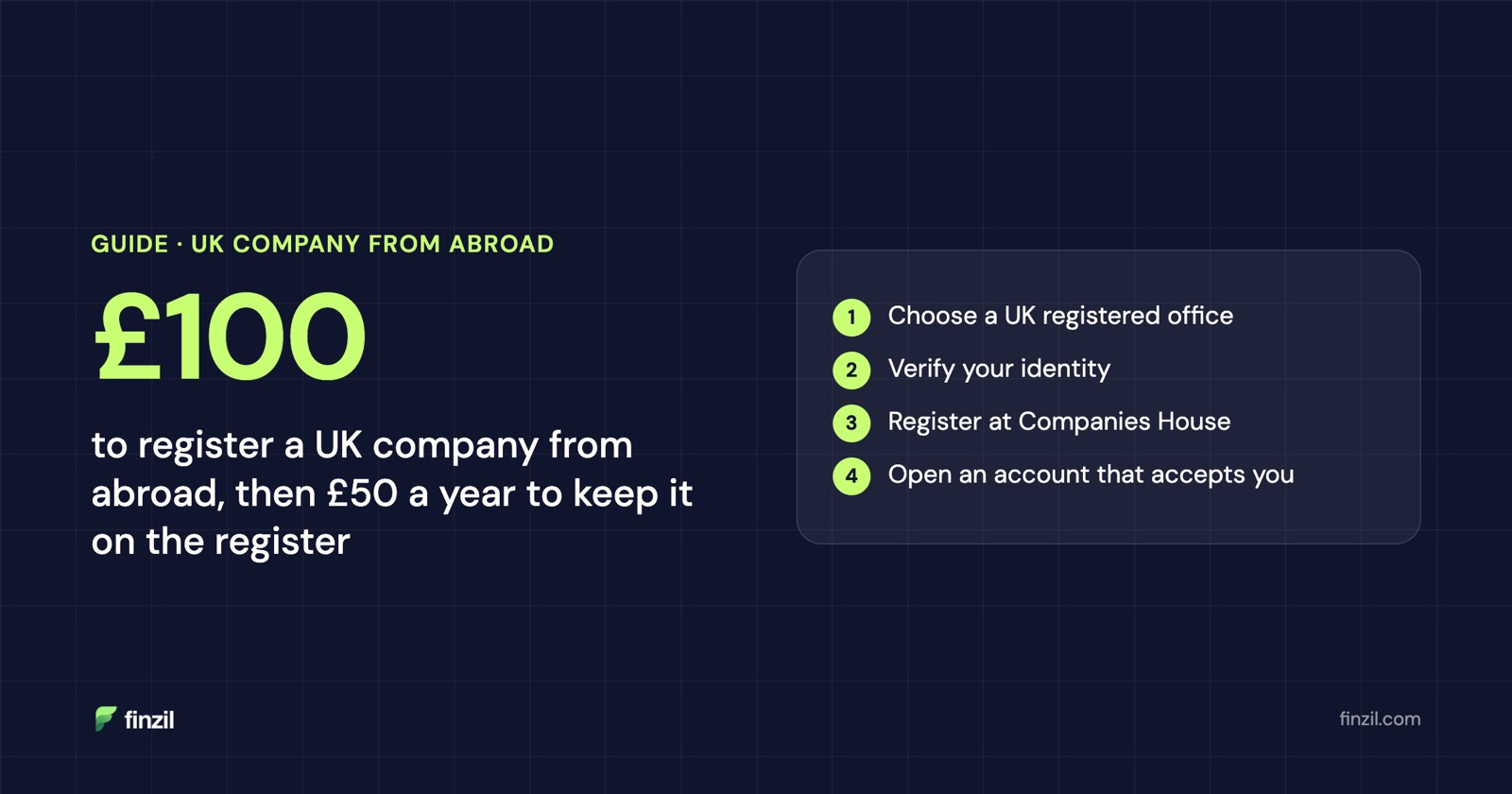
You don't need to live in the UK to own or direct a UK limited company. Registering it online costs £100 and the yearly confirmation statement £50. You need a UK address for the registered office, and every director must verify their identity with Companies House first, which works from abroad. The bank account is the hard part: 7 of the 13 UK-only account providers we checked in October 2026 refuse directors who live abroad.
| Question | Short answer |
|---|---|
| Can I set up a UK company if I live abroad? | Yes. Directors don't have to live in the UK, and owners can be anywhere. |
| Does it let me live or work in the UK? | No. A company gives its director no visa or right to work there. |
| What does it cost? | £100 to register online, £50 a year after, plus a UK address service if you have no UK address. |
| How long does it take? | Usually within 24 hours of filing online, once identity checks are done. |
| What's the hard part? | The bank account. Most UK app banks want every director to live in the UK. |
What a UK company costs from abroad
Companies House fees, checked on 26 November 2026:
| What | Fee | When |
|---|---|---|
| Register the company online | £100 | Once |
| Register by post | £124 | Once, instead of online |
| Same-day registration (through formation software) | £156 | Once, instead of the above |
| Identity verification through GOV.UK One Login | Free | Once per person |
| Confirmation statement online | £50 | Every year |
| Confirmation statement on paper | £110 | Every year, instead of online |
Year one from Companies House: £100. Each year after: £50.
The government's fees are the small part. What the table leaves out:
- A UK registered office address, if you have none. Formation agents and accountants sell it as a yearly service.
- Identity checks through an agent, if the GOV.UK app doesn't work with your passport. Authorised Corporate Service Providers charge for it.
- An accountant for the yearly accounts and Corporation Tax return. For most owners abroad this is the largest cost.
Rather have it done for you? Finzil can register the company for you. Request a UK company formation and we reply with the steps, the documents we need and a quote.
Step 1: Check the name
The name must end with "Limited" or "Ltd" and can't be the same as, or too like, a name already on the register. Companies House's free name search shows both. Some words, such as "bank", "insurance" or "royal", need permission first.
Check the web domain as well. Account providers compare the website with the company's name and activity.
Step 2: Get a UK registered office address
Every UK company needs a registered office: a physical address in the UK. It has to be in the part of the UK where the company is registered: England and Wales, Scotland, or Northern Ireland. A PO box doesn't count. Since March 2024 it must also be an "appropriate address", one where post sent there reaches someone at the company.
If you have no UK address, a formation agent or accountant can provide one. The registered office is public, and official letters, including your Corporation Tax reference, go there, so choose a service that forwards mail quickly.
A director's own service address and home address can be anywhere in the world. The home address stays off the public register.
You now have a UK address for the company.
Step 3: Verify your identity with Companies House
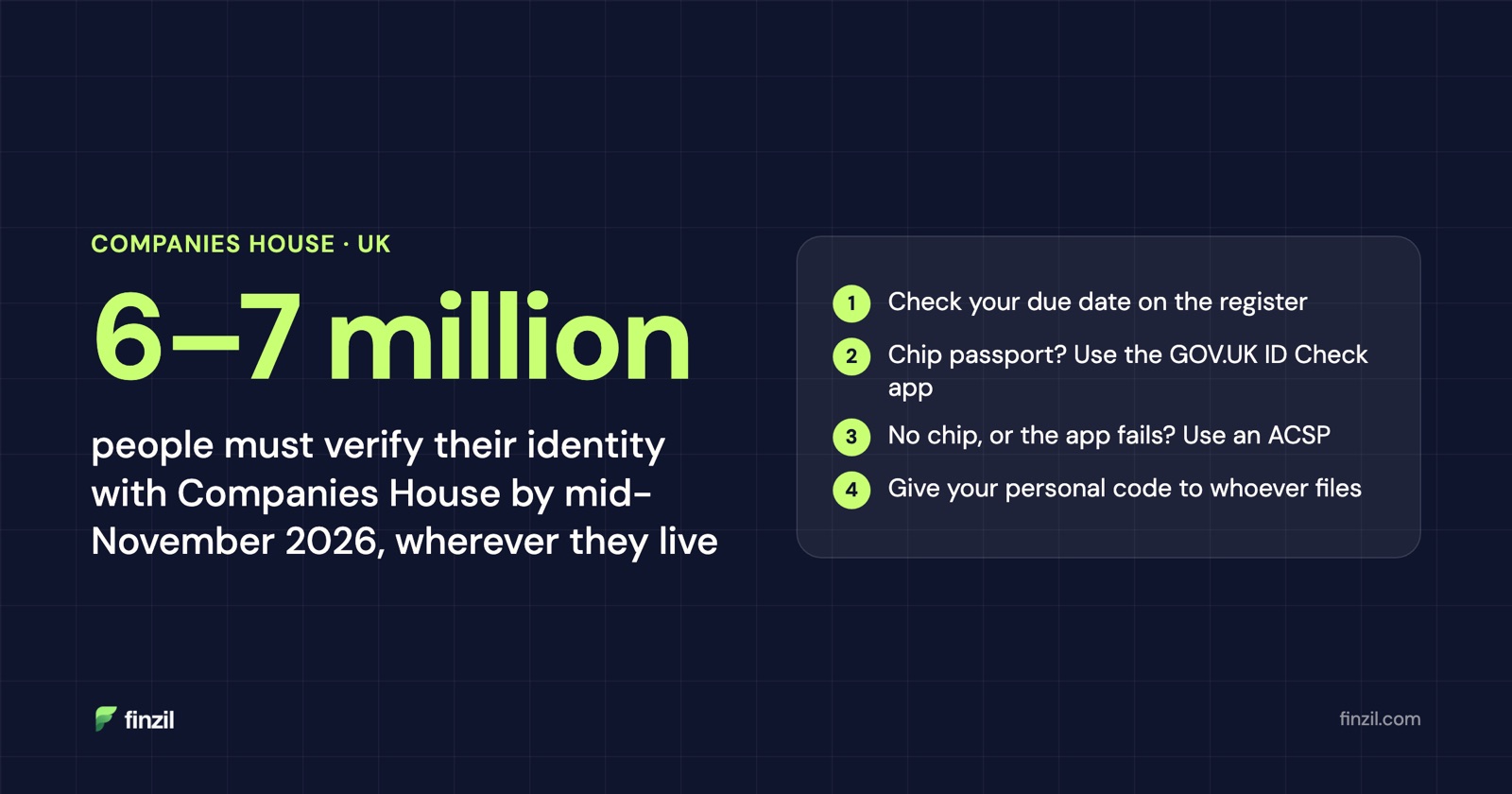
Since 18 November 2025 every new director has to verify their identity before the company can be registered. People with significant control (anyone with more than 25% of the shares or votes) verify too, by a deadline Companies House sets. The 12-month transition for existing companies ended on 17 November 2026, so this now applies to every director on the register.
From abroad there are two ways:
- The GOV.UK One Login app, with a passport that has a chip. It's free. Our guide to Companies House ID checks for directors abroad covers which passports work.
- An Authorised Corporate Service Provider (ACSP), a firm registered with Companies House to verify people. It can check you from any country, for a fee.
You now have a personal code. You'll need it when the company is registered, and for every UK company you join later.
Step 4: Register the company at Companies House
You file online on GOV.UK, or through a formation agent who files for you. The application needs:
- the company name and registered office address;
- a registered email address, which Companies House uses but doesn't publish;
- what the company does, as an SIC code;
- at least one director, aged 16 or over, with their personal code;
- the people with significant control;
- the shares: how many, their value and who holds them;
- the articles of association (the standard "model articles" are fine for most companies);
- a statement that the company is being formed for a lawful purpose.
A UK company needs no UK director and no UK shareholder. Online applications are usually registered within 24 hours.
You now have a certificate of incorporation and a company number.
Step 5: Register for Corporation Tax
HMRC sends a Unique Taxpayer Reference (UTR) by post to the registered office after the company is registered. You then register the company for Corporation Tax within three months of it starting to do business, whether or not it makes a profit.
The rates for the year from 1 April 2026: 19% on profits up to £50,000, 25% on profits over £250,000, and marginal relief between the two. VAT registration becomes compulsory when taxable turnover passes £90,000 in a 12-month period.
Where the company is run from matters too. A UK company that is managed and controlled entirely from another country can also be treated as tax resident there. If you'll run it from abroad, ask an adviser who knows both countries before you start trading.
Step 6: Open a business account
Forming a UK company takes a day from anywhere. The account is where it stops. Finzil checked the 13 providers that only accept UK companies in October 2026. Seven state that directors living abroad can't open an account, and one more needs the director who applies to live in the UK. Two accept directors abroad.
The wording varies. Starling Bank needs all owners and directors to live in the UK. Monzo Business needs you to be in the UK when you apply. Zempler Bank takes directors from 36 listed countries, but the one who applies must live in the UK.
Eight providers on Finzil give a UK company its own UK account details and accept directors abroad, among them Tide, WorldFirst, iFAST Global Bank and OMG One. Which one fits depends on where you live, what the company does and the currencies you need. Our UK accounts for non-resident directors guide compares all eight.
Providers ask a director abroad for the certificate of incorporation, a passport, proof of home address, a description of the business with a website or contracts. More in the documents providers ask for.
What you owe each year
A UK company has more yearly filings than a US LLC, and Companies House fines are automatic.
| When | What | Late penalty |
|---|---|---|
| Every year, up to 14 days after the review period ends | Confirmation statement, £50 | A fine of up to £5,000, and the company can be struck off |
| 21 months after registration (first year), then 9 months after each year end | Annual accounts to Companies House | £150 up to 1 month late, up to £1,500 after 6 months |
| 9 months and 1 day after the year end | Corporation Tax paid to HMRC | Interest |
| 12 months after the year end | Corporation Tax return (CT600) | HMRC penalties |
| As your home country sets | Your own tax return, if you take salary or dividends | Home country's rules |
From 1 April 2028 accounts can only be filed through commercial software, not on the Companies House website.
Questions people ask
How much does it cost to set up a UK company from abroad?
£100 to register online at Companies House and £50 a year for the confirmation statement (fees checked 26 November 2026). Add a UK registered office service if you have no UK address, and an accountant for the yearly accounts and tax return.
Can a non-resident be the only director of a UK company?
Yes. A UK company needs at least one director aged 16 or over, and the director doesn't have to live in the UK. They must verify their identity with Companies House first.
Do I need a UK address to register a UK company?
The company does: its registered office must be a physical address in the UK. The directors' own addresses can be anywhere.
Can a director abroad verify their identity with Companies House?
Yes, with the GOV.UK One Login app and a chip passport, or through an Authorised Corporate Service Provider, which can verify people in any country.
Can a non-resident director open a UK business bank account?
Yes, with providers that accept directors abroad, such as Tide, WorldFirst and OMG One. 7 of the 13 UK-only providers on Finzil refuse them (October 2026).
Fees from Companies House (Companies House fees, updated 25 September 2026). Rules from GOV.UK: setting up a limited company, company address, directors, identity verification for Companies House, Corporation Tax rates, annual accounts and late filing penalties, VAT registration. Provider facts from Finzil profiles, checked in October 2026. Read 26 November 2026. Finzil doesn't rate providers and nobody paid to appear here. General information, not legal or tax advice.
Providers in this article
UK accounts that accept directors abroad
Each of these publishes that it opens accounts for UK companies whose directors live outside the UK. Check the director countries and industries on each profile before applying.
| Provider | Licensed in | Known for |
|---|---|---|
 TideE-money institution |  | Free planNon-residents accepted |
 WorldFirstE-money institution |  | Marketplace sellersTrade payments |
 iFAST Global BankBank | | Multi-currencyInternational companies |
 OMG.oneE-money institution | | Non-residents accepted37 currencies |
 GoSoloBusiness account platform | | Free accountNon-residents |
 FirePayment institution |  | EUR and GBPAPI |
 Emerald24E-money institution |  | UK local railsNon-residents accepted |
 TransferraE-money institution | | Non-residents accepted40+ currencies |
 3S MoneyE-money institution |  | Local IBANsNon-residents accepted |
Not sure which one fits? Your profile ranks them for your business, with the reason behind each.