The short answer
Get local account details in the currencies your clients pay you in most, and keep SWIFT for the rest. A local payment (ACH, Faster Payments, SEPA) arrives in full and is usually free to receive. A SWIFT payment can lose fees to banks along the way and wait days at the last one. The biggest cost of either is the currency conversion on arrival, not the transfer fee.
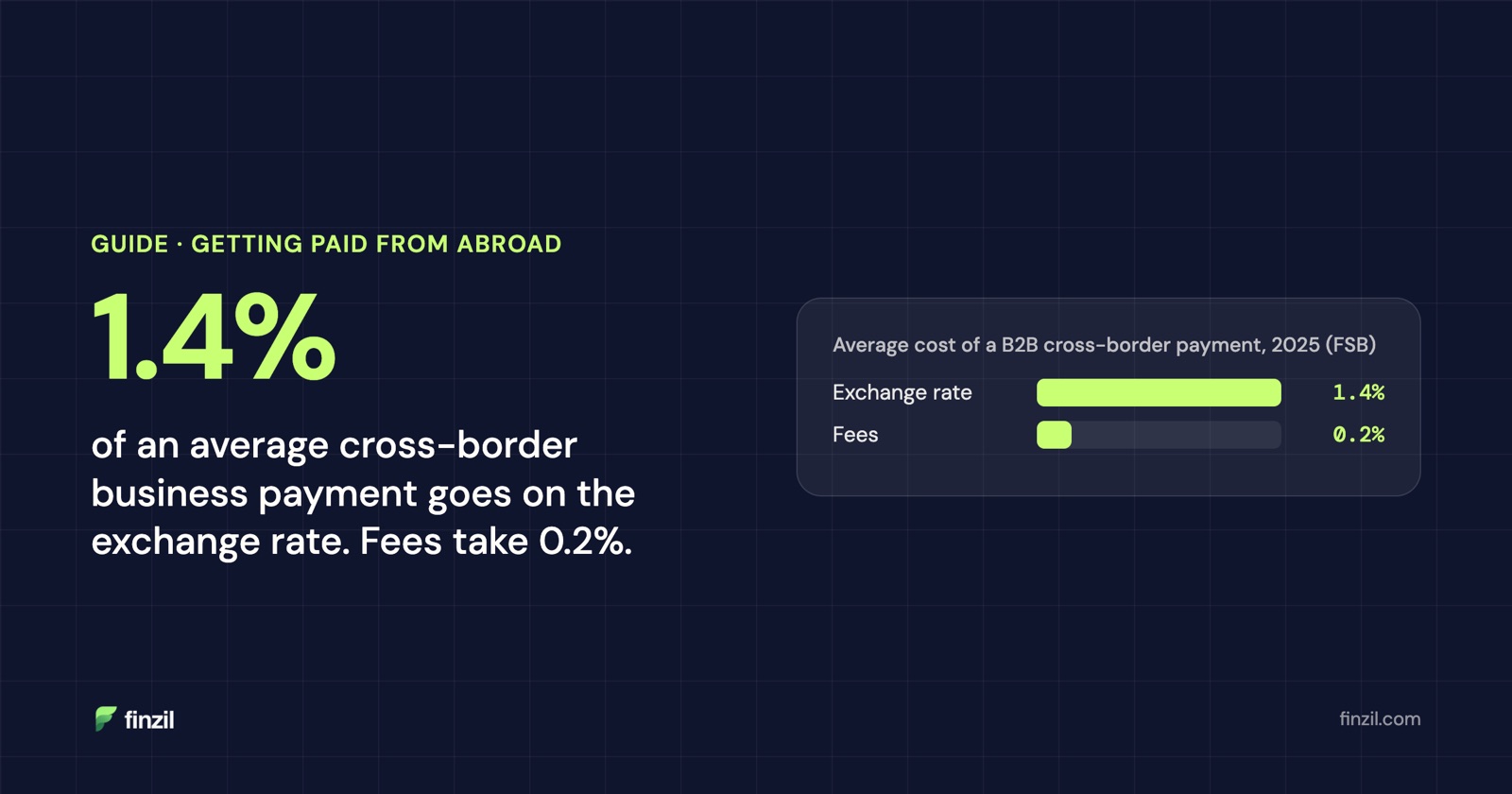
- 1.6%: average cost of a small business's cross-border payment in 2025, of which 1.4% is the exchange rate (FSB)
- 2.2% of B2B payment services credit the recipient within an hour (FSB, 2025)
- 19% of providers on Finzil that publish a SWIFT receiving fee charge nothing; for SEPA it's 66% (November 2026)
Where this comes from
This guide is about getting paid: a client abroad settling your invoice. Sending money is in SEPA vs SWIFT for business payments. The research comes from the Financial Stability Board's 2025 report on the G20 cross-border payment targets and Swift's own speed data. Fees come from the 298 provider profiles on Finzil, checked in October and November 2026.
How a SWIFT payment reaches you
Your client's bank and yours rarely hold accounts with each other. So the money travels through a chain:
- Your client's bank debits their account and sends a SWIFT message.
- If it has no account with your bank, it passes the payment to a correspondent bank that does, sometimes through two.
- Each bank in the chain can deduct its own charge from the amount.
- Your bank receives what's left, runs its checks, may convert the currency, takes its receiving fee and credits you.
That is correspondent banking. Your client picks who pays the charges with a code. OUR: they pay everything. SHA: each side pays its own bank, and the banks in the middle take theirs from the amount. BEN: you pay all of it.
SHA is the default at most banks, so an invoice for €10,000 often arrives as €9,975 or €9,960. In our experience each intermediary takes €5–€25. The invoice then shows as part-paid, and someone has to chase a gap smaller than the cost of chasing it.
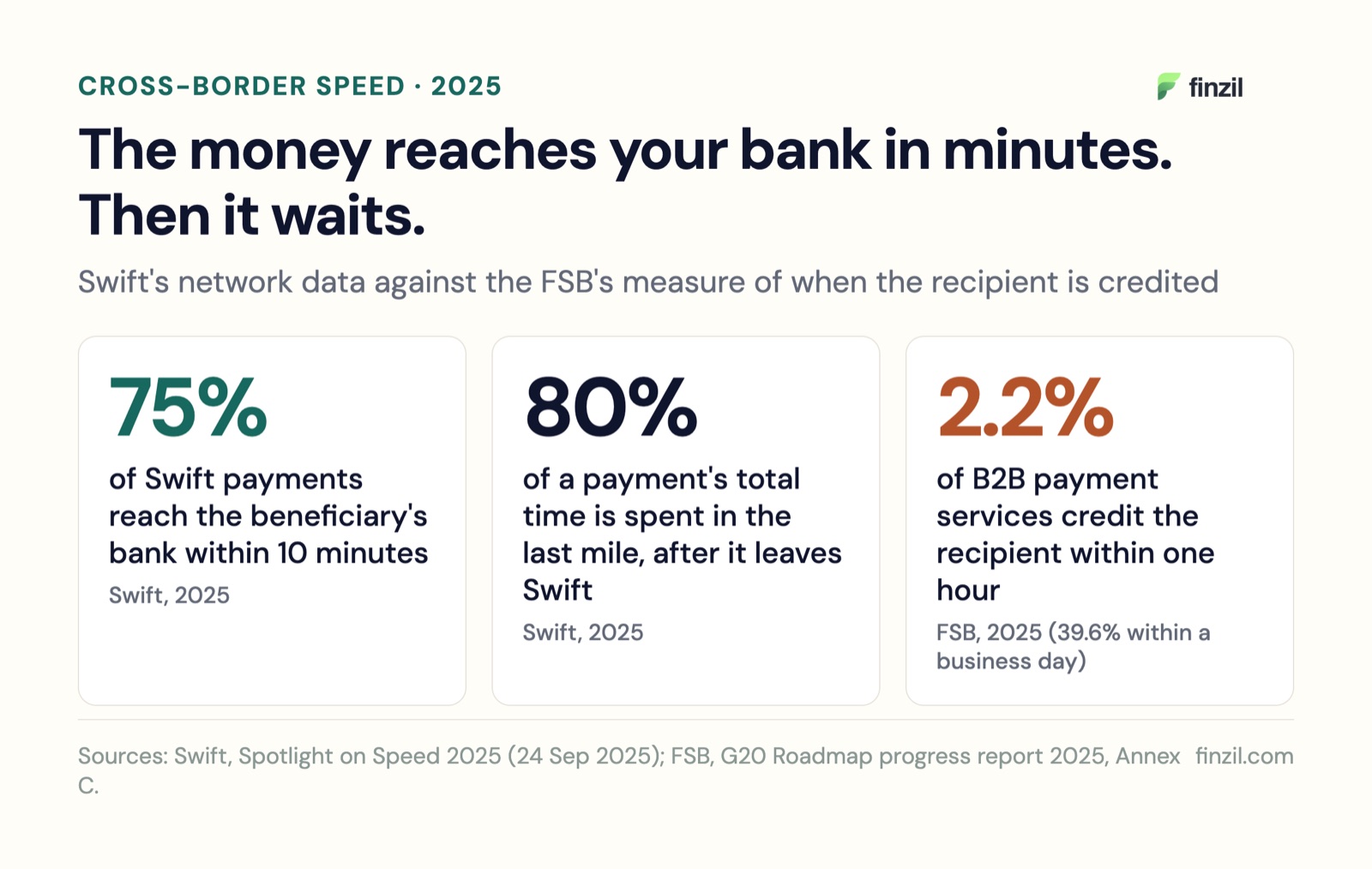
The network isn't the slow part. Swift says 75% of payments on its network reach the beneficiary's bank within 10 minutes. Less than 20% of the total time is spent in flight; 80% is spent in the "last mile", after the payment leaves the network. Swift lists the causes in order: purpose-of-payment reporting rules, currency and risk controls, banks that don't run 24/7, and manual checks.
The Financial Stability Board (FSB) measures the end of that chain. In 2025, 2.2% of the B2B payment services it tracked credited the recipient within an hour. Within one business day it was 39.6%, down from 54% in 2023. The G20 target for 2027 is 75% within an hour.
The exchange rate costs more than every fee combined
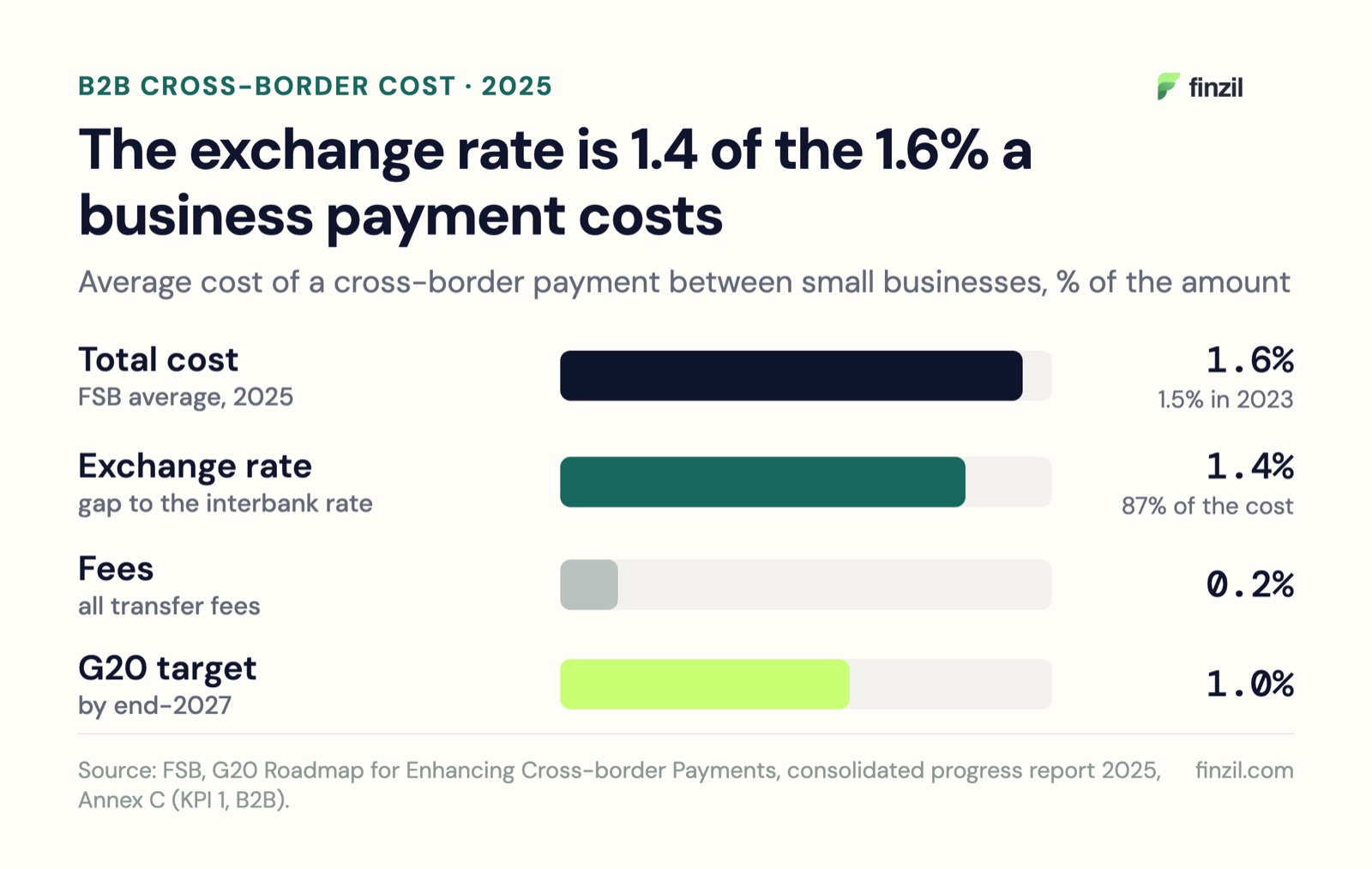
The FSB puts the average cost of a cross-border payment between small businesses at 1.6% of the amount in 2025. Of that, 1.4% is the exchange rate and 0.2% is fees. The exchange rate was 87% of the cost, and the average has edged up from 1.5% in 2023. The G20 goal is 1% by the end of 2027, and the FSB has said satisfactory progress by then is unlikely.
The conversion often happens without anyone deciding it. If a dollar payment lands in a sterling account, the bank converts it on arrival at its own rate. HSBC says that if you receive a different currency, it "will automatically convert those funds into your account currency on receipt". The rate is rarely published: of the 226 providers on Finzil with an exchange-rate entry, 134 don't publish a conversion price.
A business comparing receiving fees of £7 and £0 can miss a 1–3% conversion that happens in the same second.
What a local collection account is
A local collection account gives you account details in another country's own payment system, without a company or bank account there. It works like this:
- A payment company, usually an EMI (electronic money institution: licensed to hold your money, but not a bank), holds accounts at partner banks in the US, the UK, the euro area and elsewhere.
- It gives your business details in each: a US account and routing number, a UK sort code and account number, a euro IBAN.
- Your US client pays by ACH or a domestic wire, as if paying a US supplier. Your UK client pays by Faster Payments. Your German client pays by SEPA.
- The money arrives in full, in that currency, and stays in it until you choose to convert.
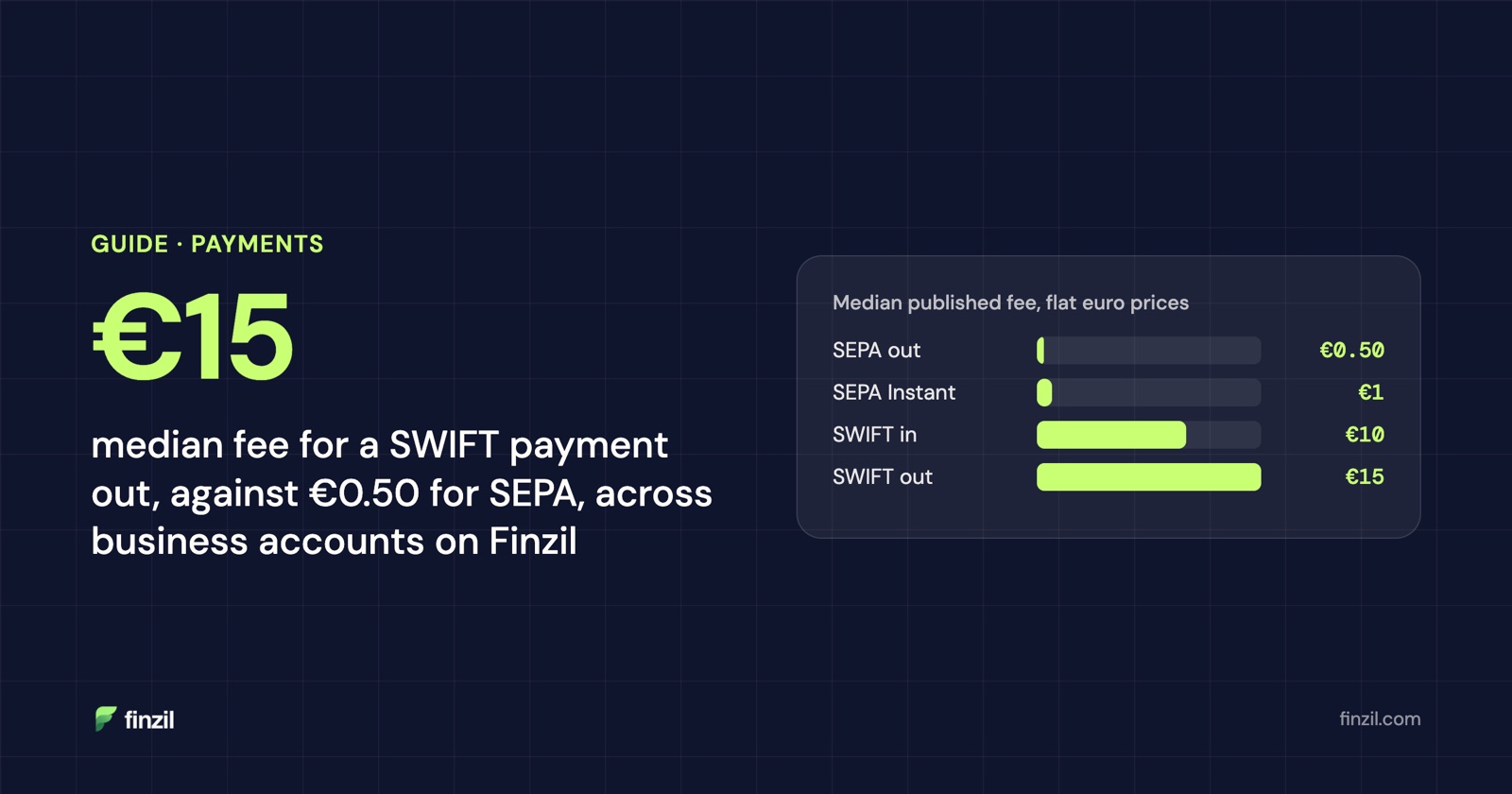
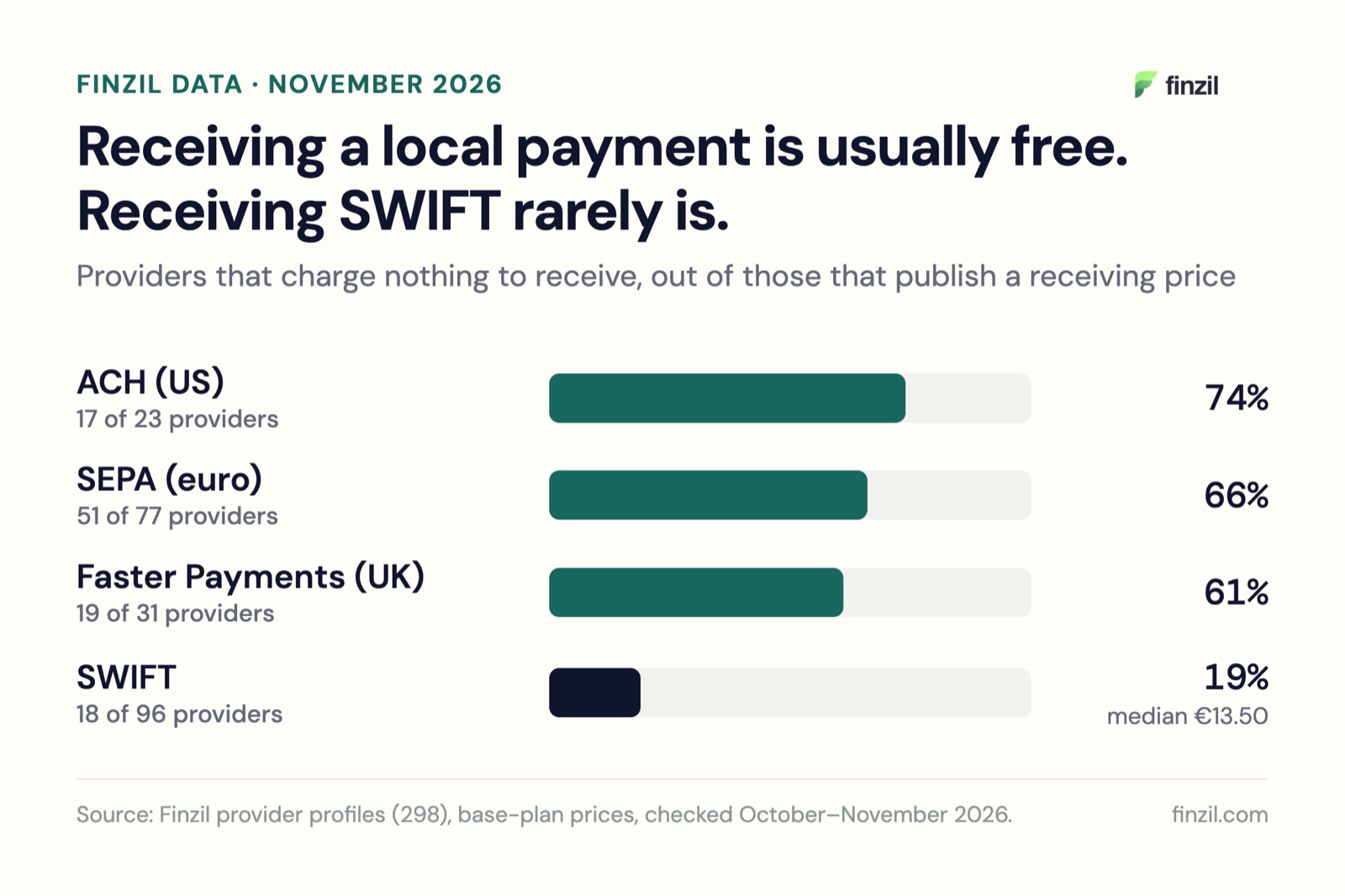
There is no correspondent chain and nothing is deducted on the way. Receiving through local systems is free at most providers that publish a price: 51 of 77 for SEPA, 19 of 31 for Faster Payments and 17 of 23 for ACH. For SWIFT it's 18 of 96, and the median flat fee is €13.50 (Finzil, November 2026).
Local details don't make SWIFT disappear. A client who pays your US details from a bank outside the US still sends a wire, and the provider charges for it. Wise, for example, charges £2.16 to receive a SWIFT payment in pounds and $6.11 in dollars (checked October 2026). Local details pay off when the client pays from inside that country.
Some clients won't pay into the details you give them
This is where many businesses lose a week, and the reason is the payer's checks, not yours.
Name checks. In the UK, Confirmation of Payee checks the account name before a payment goes out; the Payment Systems Regulator says it covered around 99% of the UK market by October 2024. In the euro area, Verification of Payee has done the same since 9 October 2025. If your details sit in a pooled account in the provider's name, with your reference on top, the check can come back as a mismatch. A finance team paying hundreds of suppliers will stop there.
Supplier onboarding. Larger clients often want a bank letter, an account in the company's exact legal name, or an IBAN from the country you're registered in. A UK company with a Lithuanian IBAN can be asked to explain why.
The EU rule on foreign IBANs. In the EU, a payer may not refuse a euro account because of the country in the IBAN. Article 9 of the SEPA Regulation (260/2012) says the payer "shall not specify the Member State" where your account is, as long as SEPA can reach it. It doesn't bind UK payers, and it doesn't stop a client from asking.
So check two things before new details go on an invoice: the account is in your company's name, and the provider will give you a confirmation letter. Most providers we recorded state that their local details are in the company's name. CurrencyFair says plainly that it uses its own pooled accounts, paid with your customer reference. PayPal gives no IBAN at all.
PayPal and Stripe suit card buyers, not invoices
Payment platforms solve a different problem: they let a customer pay by card or wallet, which a shop or a subscription needs. For a business client settling a €10,000 invoice they are expensive.
PayPal UK charges 2.9% plus a fixed fee on a sale. A buyer in the EEA adds 1.29%, and one elsewhere 1.99%. Converting the balance costs 3% above PayPal's base rate (checked October 2026). Stripe and other card processors price differently, but every payment still costs a percentage. How a payment platform differs from an EMI account and a bank is in PSP vs EMI vs bank.
An illustration: one €10,000 invoice from a German client to a UK company that wants pounds.
| Route | What it costs | Assumptions |
|---|---|---|
| PayPal, standard sale rate | about €706 (7.1%) | 4.19% sale fee, then 3% conversion; fixed fee left out |
| SWIFT into a sterling bank account | about €168 (1.7%) | One intermediary takes €20, £7 receiving fee, 1.4% conversion on arrival |
| Local euro IBAN, convert later | about €50 (0.5%) | Free SEPA receipt, 0.5% conversion |
| Local euro IBAN, keep euros | €0 | You spend the euros on euro costs |
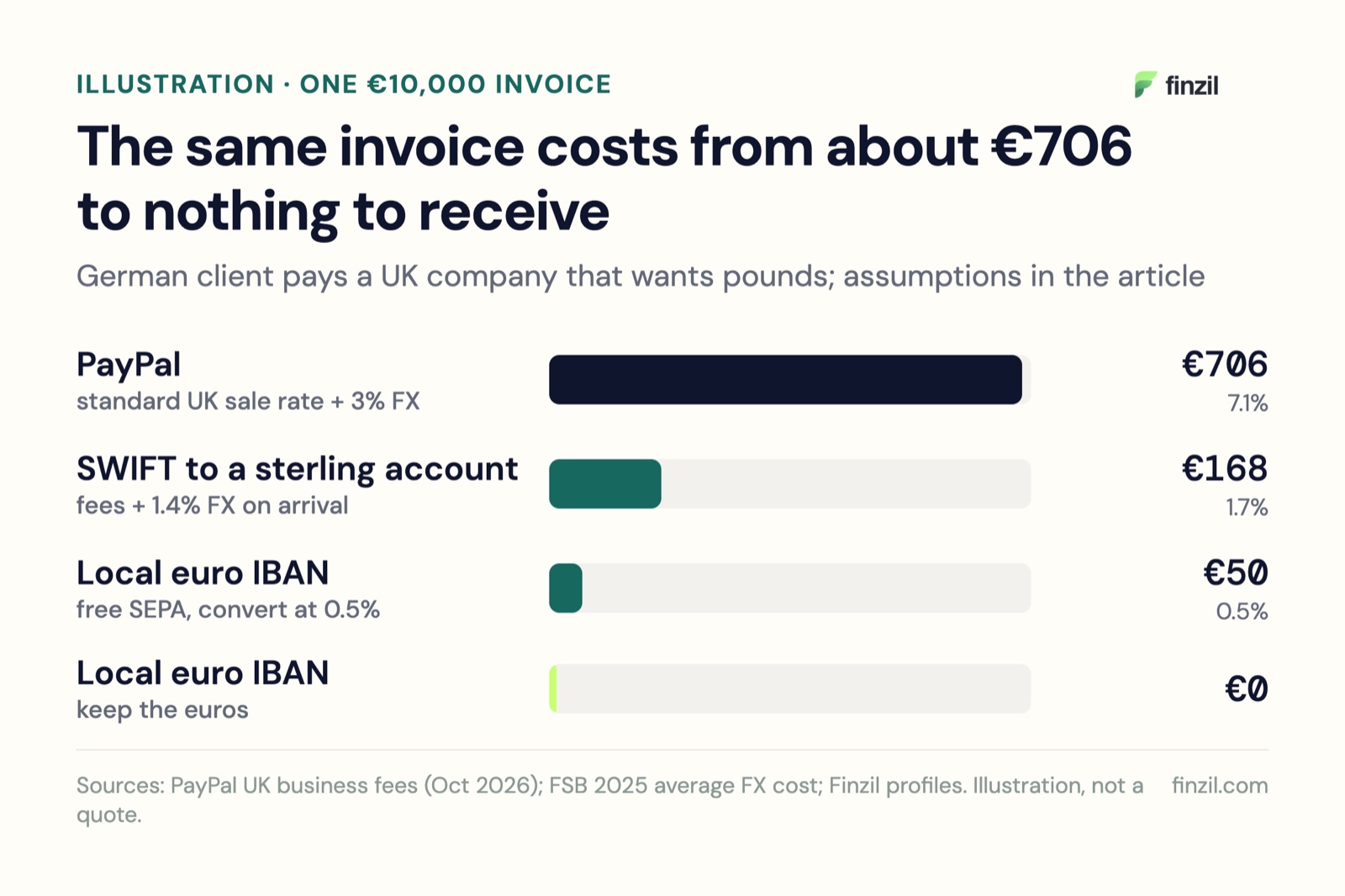
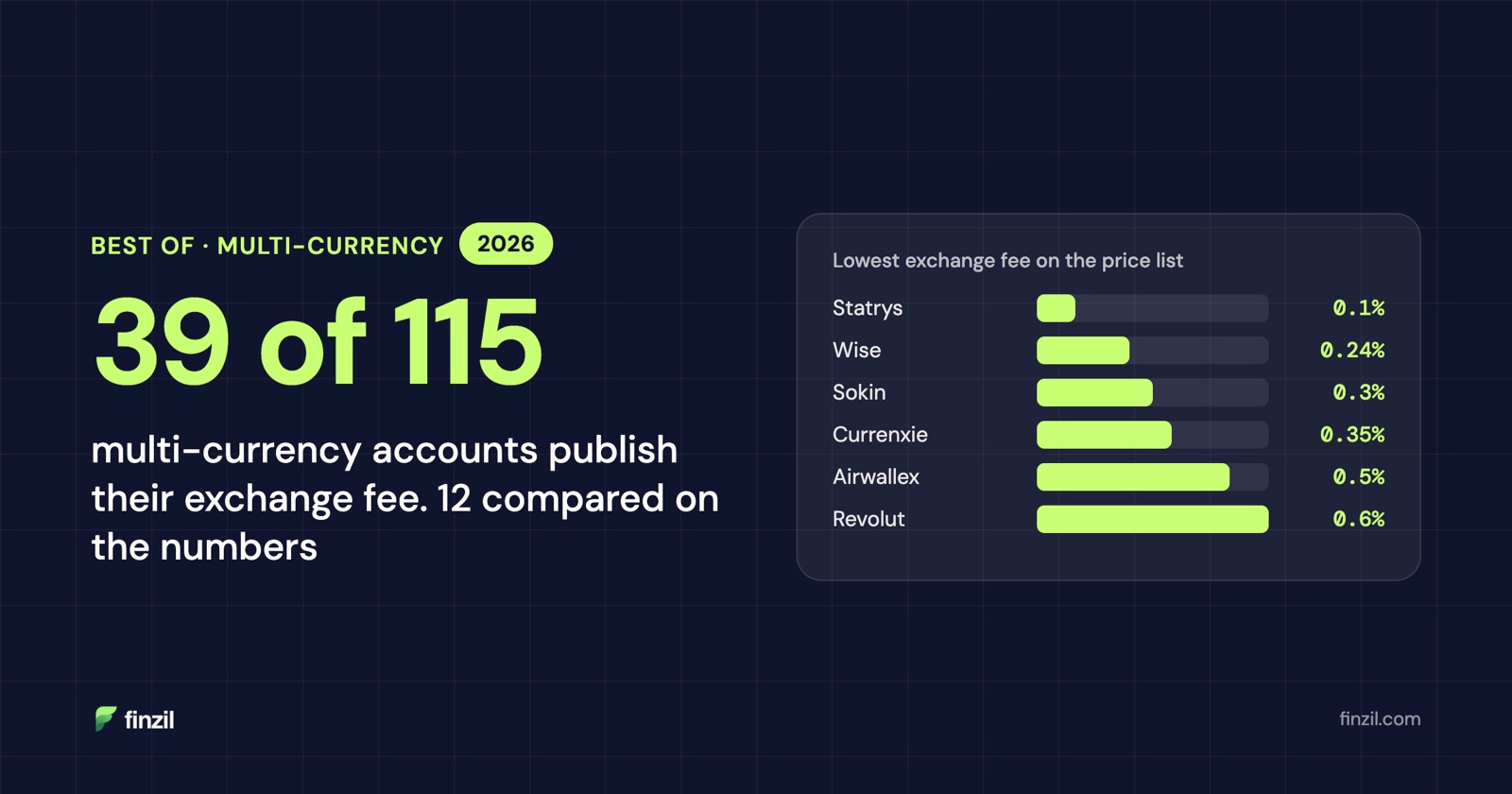
The 1.4% is the FSB's average, not a quote from any bank; yours may be better or worse. The 0.5% is Airwallex's published rate for major currencies. Conversion prices on multi-currency accounts vary more widely than this table suggests.
SWIFT is still the right answer for some payments
SWIFT reaches almost every bank in the world. Local details cover a limited set of currencies: Wise, for example, gives local details in 10. Use SWIFT when:
- the client pays from a country, or in a currency, where you have no local details;
- the payment is large and the client's bank needs a wire for its own controls;
- the client will only pay a bank in your country of registration.
Then ask the client to send OUR on large invoices, or build the expected deductions into the invoice. And receive into an account that holds the currency, so you choose when to convert.
Our view: get local details in any currency you invoice more than once or twice a month, keep SWIFT for one-off and unusual currencies, and never let conversion happen on arrival by default. For most small exporters that means two accounts: the bank they already have, and a multi-currency account with local details.
The hard part isn't choosing the payment system. It's finding a provider that gives local details to a company like yours, registered where yours is, in your clients' currencies. Many don't, and their acceptance lists are where applications fail.
What to do
- List where last year's money came from: currency, country, number of payments and average size.
- For each currency with regular payments, find a provider that gives local details in your company's name. Our best multi-currency business accounts compares them, and the FX solutions page compares conversion prices.
- Ask the provider for an account confirmation letter before the first invoice goes out with new details.
- Turn off automatic conversion where you can, and convert when you choose, at a price you can see.
- For payments that stay on SWIFT, set OUR on large invoices or price the deductions in.
Questions people ask
What is a local collection account?
Account details in another country's payment system, such as a US account and routing number or a euro IBAN, provided by a payment company through its partner banks. Clients pay you with a domestic payment, so the money arrives in full and is usually free to receive.
Why did I receive less than my client sent?
Banks in the SWIFT chain took their fees from the amount. With SHA, the default at most banks, each intermediary can deduct a charge; in our experience it's €5–€25 per bank. Ask the client to send OUR, or give them local details.
How long does an international payment take to arrive?
Swift says 75% of payments on its network reach the recipient's bank within 10 minutes. But the FSB found only 39.6% of B2B payment services credited the recipient within one business day in 2025. Local payments such as SEPA Instant and Faster Payments usually arrive within seconds.
Is PayPal a good way to receive international business payments?
For card buyers and small sales, it works. For invoices it's expensive: PayPal UK charges 2.9% plus a fixed fee per sale, 1.29–1.99% more for buyers abroad and 3% above its base rate to convert (October 2026).
Can a client refuse my IBAN because it's from another country?
Not for euro payments within the EU. Article 9 of the SEPA Regulation stops a payer from choosing the country where your account is held, as long as SEPA can reach it. UK payers aren't bound by it.
Sources: Financial Stability Board, G20 Roadmap for Enhancing Cross-border Payments: consolidated progress report for 2025 (9 October 2025), Annex C KPI tables, and G20 targets page; Swift, "Spotlight on Speed 2025" (24 September 2025); Payment Systems Regulator, Confirmation of Payee compliance report on Specific Direction 17; Regulation (EU) 2024/886; Regulation (EU) 260/2012, Article 9; HSBC, "Receiving international payments"; PayPal UK business fees; Finzil provider profiles (298 profiles, checked October to November 2026). General information, not financial or legal advice.
Providers in this article
Accounts with local receiving details
Providers that give local account details in several currencies, plus the platforms named in this article. Read who each one accepts before applying.
| Provider | Licensed in | Known for |
|---|---|---|
 Wise BusinessE-money institution |   | Low FX costsStandard businesses |
 AirwallexE-money institution |   | Global accountsOnline businesses |
 WorldFirstE-money institution | | Marketplace sellersTrade payments |
 Revolut BusinessBank |  | Cards and spend controlsStartups and SMEs |
 AmnisPayment institution |  | FX specialistExpense cards |
 CurrencyFairPayment institution |    | FX transfersPooled accounts |
Not sure which one fits? Your profile ranks them for your business, with the reason behind each.